The Voice Below
The amber light pulses once — slow, like a heartbeat — and then the sound reaches you. Not through the air. Through the stone beneath your feet, through the bones of your hands pressed against the carved wall, through something older than hearing. A voice. It speaks your name in syllables no living throat should know, in a dialect of ancient Egyptian that died before the pharaohs built their last tomb. And yet you understand every word.
You were expected. The voice is neither loud nor gentle — it simply is, the way gravity is, the way dark is. It tells you the estate was never your grandfather's to give. He was a keeper, a caretaker, a man who stumbled into a responsibility he spent sixty years trying to understand and finally, desperately, tried to pass to you. The land chose him only because it could not yet reach you. It has always been waiting — specifically, precisely, inevitably — for you.
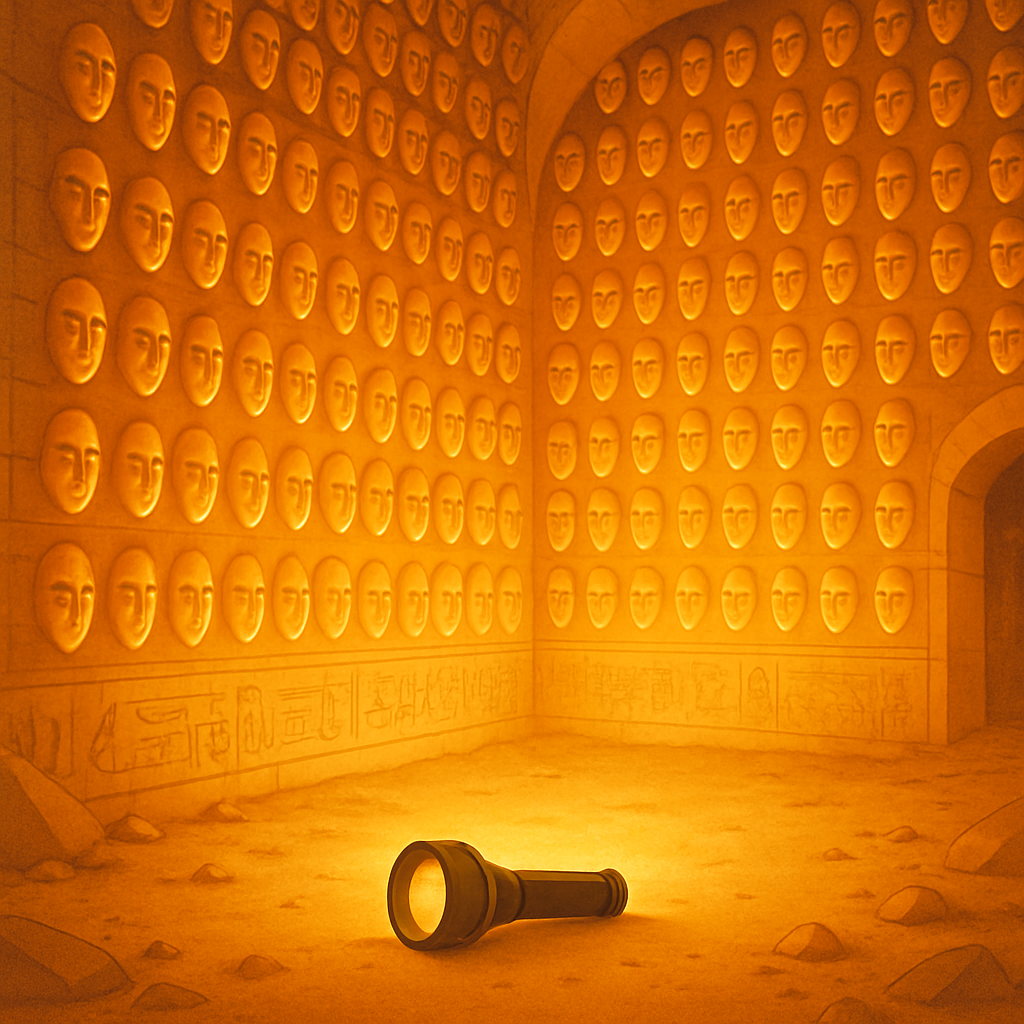
The carvings of your face seem to breathe in the amber light. Thousands of versions of you, etched across millennia, watching with the same patient expression. Your flashlight flickers and dies. You don't need it. The chamber glows faintly from within the stone itself, and in that cold radiance you understand — with a certainty that bypasses reason entirely — that whatever speaks to you now has been holding this moment in trust for a very long time. It is not threatening you. It is not commanding you. It is simply, at last, asking.
The silence after the voice fades is the loudest thing you have ever heard. Somewhere far above, the desert wind moves across the estate. Your grandfather's warning echoes in your memory — do not go below the third level — and you finally understand it was not a prohibition. It was a postponement. The choice, as it has always been, is yours.
Start Over