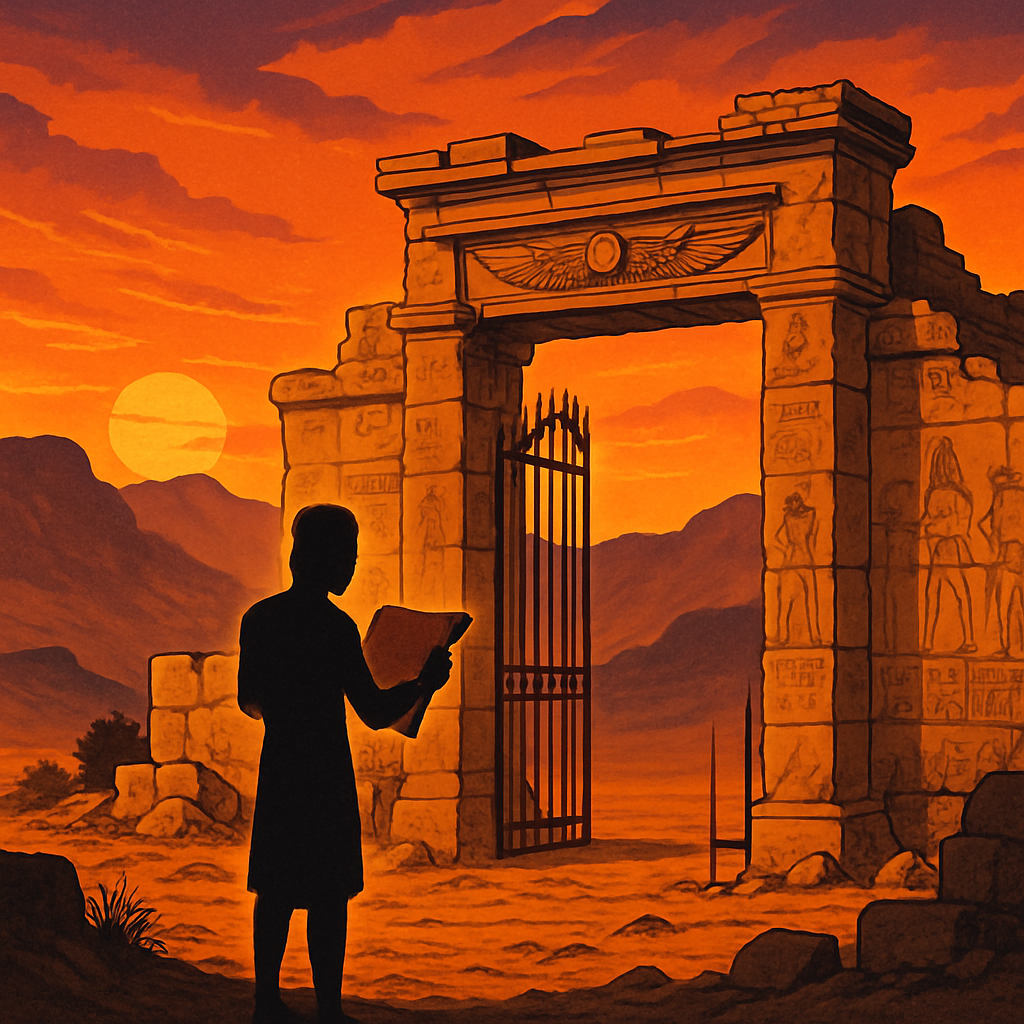
Arrival at Sunset
The taxi left twenty minutes ago, and already the silence feels like a living thing. You stand at the iron gate of your grandfather's estate, the last ember of sunlight bleeding into the desert horizon behind the Valley of the Kings. The gate lists on its hinges, rust-red and patient, and beyond it the main house rises in pale limestone — shuttered windows like closed eyes, a roof terrace draped in dead bougainvillea. No lights. No sound from the village road behind you. When you called ahead, the property manager had simply stopped answering.
The hand-drawn map trembles in your grip — not from the wind, which has died completely. You realize it's your hands. Your grandfather spent forty years excavating this land, cataloguing what lay beneath it, and his final act was to deed it to you with a sealed envelope and a warning scrawled in the margin of this map in red ink: Do not go below the third level. The solicitor in Cairo had read it aloud without expression, as though such instructions were perfectly ordinary.
Then you feel it. A vibration, low and rhythmic, rising through the soles of your shoes from the flagstone path beneath the gate. It could be groundwater. It could be the settling of ancient stone. But it comes and goes with an almost deliberate cadence — in, out, in, out — as though whatever is buried here is simply breathing, and has been breathing a very long time, and is now aware that you've arrived.
Your flashlight is in your bag. The map is in your hand. The gate is unlocked. Somewhere inside, your grandfather's study holds forty years of answers — and somewhere far below, in the dark beneath your feet, something that has apparently been waiting for exactly this moment shifts in its sleep.