The Last Entry
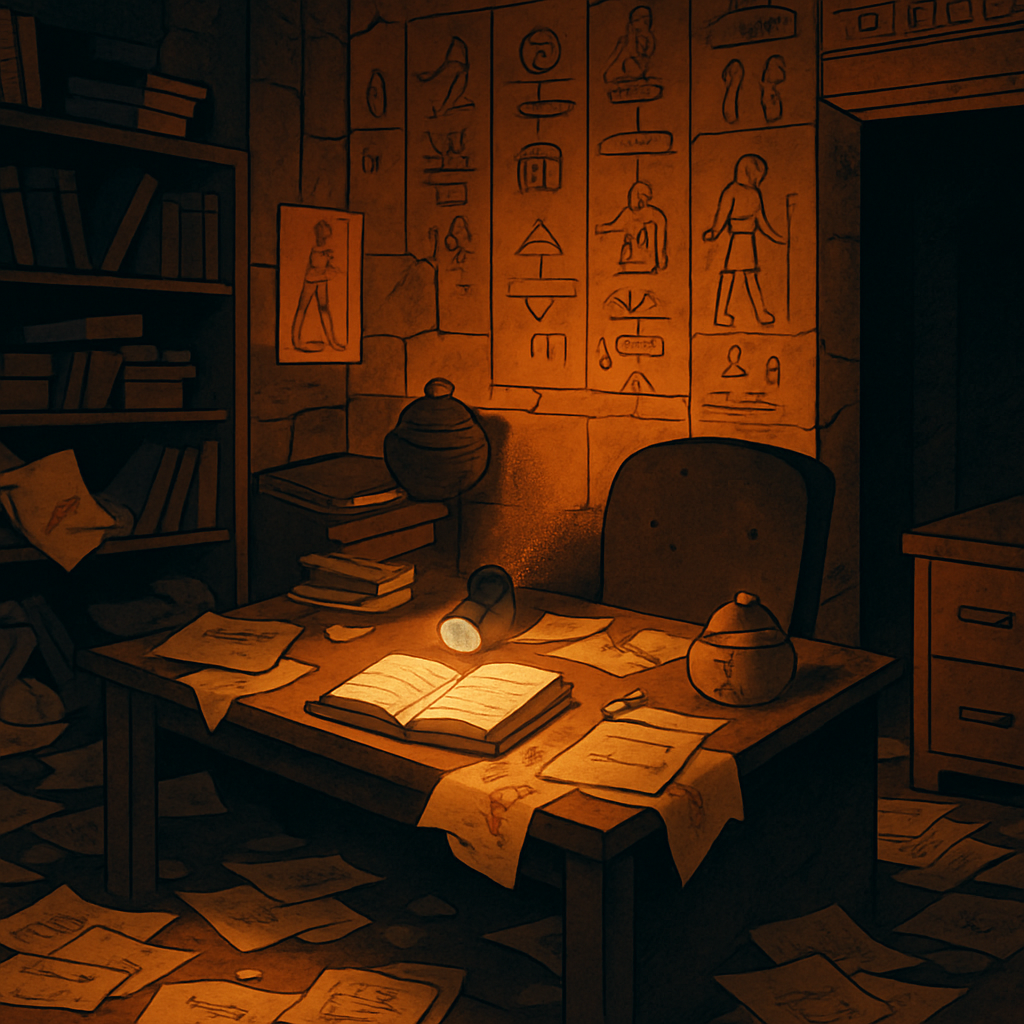
The study looks like a storm passed through it with intent. Drawers hang open like broken jaws, their contents — letters, photographs, carbon-paper receipts — fanned across the floor in drifts. Someone searched this room methodically, even if they tried to disguise it as chaos. Your flashlight sweeps across the wreckage: a toppled brass lamp, a cracked glass paperweight, your grandfather's reading chair overturned. Whoever came here was looking for something specific.
They didn't find it. You notice the loose brick almost by accident — a hairline gap in the mortar catching your beam at the wrong angle, or perhaps the right one. Behind it, wrapped in oilcloth and smelling of cedar smoke, is a leather journal with your grandfather's initials tooled into the cover. Your hands are steadier than you expect as you open it. The entries begin measured, academic — field notes and excavation logs — but they grow cramped and urgent as the pages thin. The final entry is dated three weeks ago, the handwriting barely his own: It spoke to me again. I should never have opened the fourth chamber. God forgive me, I thought I could contain it. I thought the seals would hold for another generation. Whoever finds this — follow the route I've drawn. Stay above the third level. The knowledge below is not ours to carry yet.
A folded diagram slips from between the back pages: a hand-sketched cross-section of the estate's underground levels, annotated in red ink, with a route marked in careful dashes. The third level is circled twice and underlined. Below it, the fourth chamber is marked only with a single symbol — the same one repeated in the margins of your inherited map. Your grandfather's warning hums in the silence around you, but so does something else: a faint vibration rising through the soles of your boots, rhythmic and slow, like breathing.
Start Over