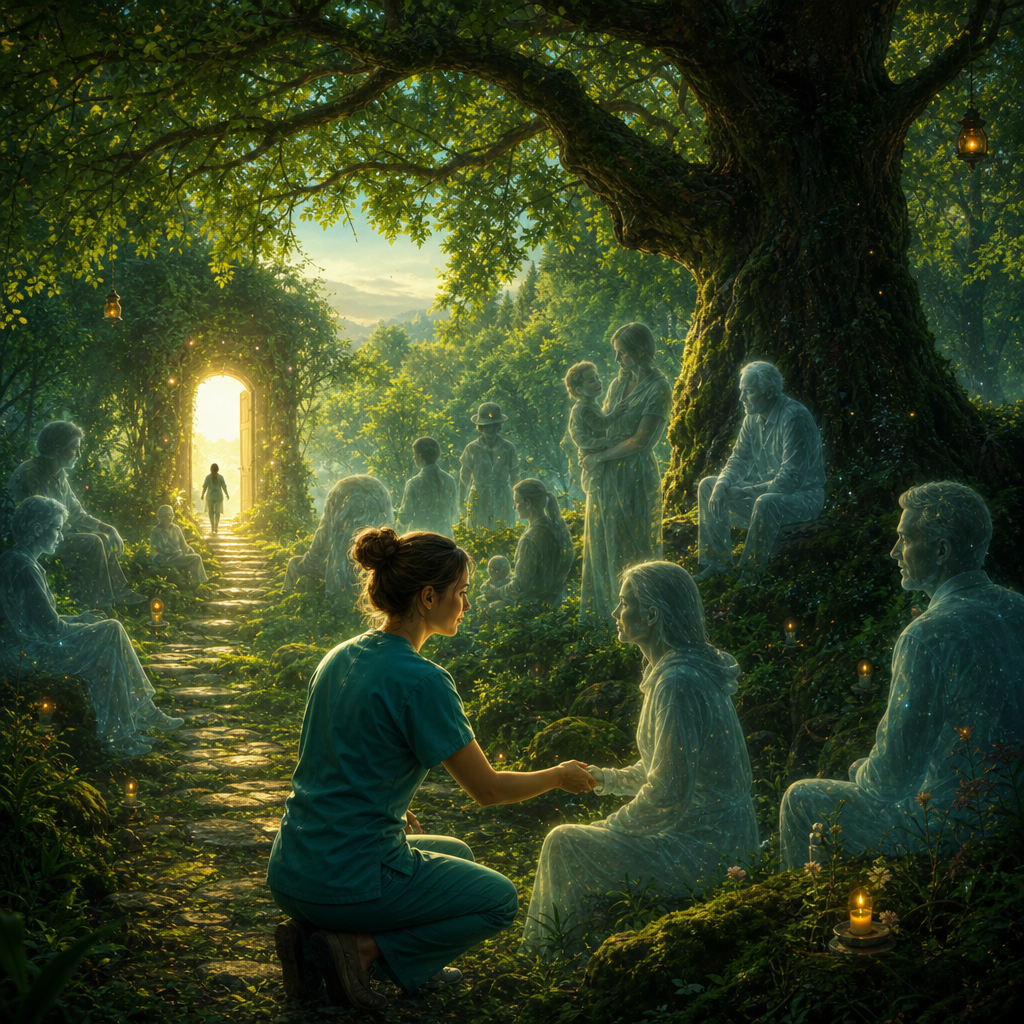
The Door, the Other Side
You step through, and the understanding arrives not like a revelation but like remembering something you always knew. The vast presence assembles itself from borrowed grief—a father's last thought, a child's half-dreamed lullaby, the precise weight of a hand held in a hospital corridor. It is not a predator. It is a chorus, stitched together from every mind that passed through and left pieces behind, desperate only to be witnessed.
You stay. Not because you cannot leave, but because you finally understand what the work actually is—not charting vitals on the living side, but here, in the grey hills, gently turning lost people back toward the door marked return. The crooked tree casts its familiar shadow. You learn the landscape the way you once learned your ward: every corner, every creak, every patient who needs a quiet voice to follow home.
In the morning, every coma patient on the ward opens their eyes. Each one describes, unprompted, a nurse with kind eyes who walked beside them through somewhere grey and told them it wasn't their time. None of them can quite remember her name. The sketchbooks are still full of rolling hills and the crooked tree—but the door in every drawing is closed now, and on the threshold, barely visible, stands a small, steady figure facing inward.