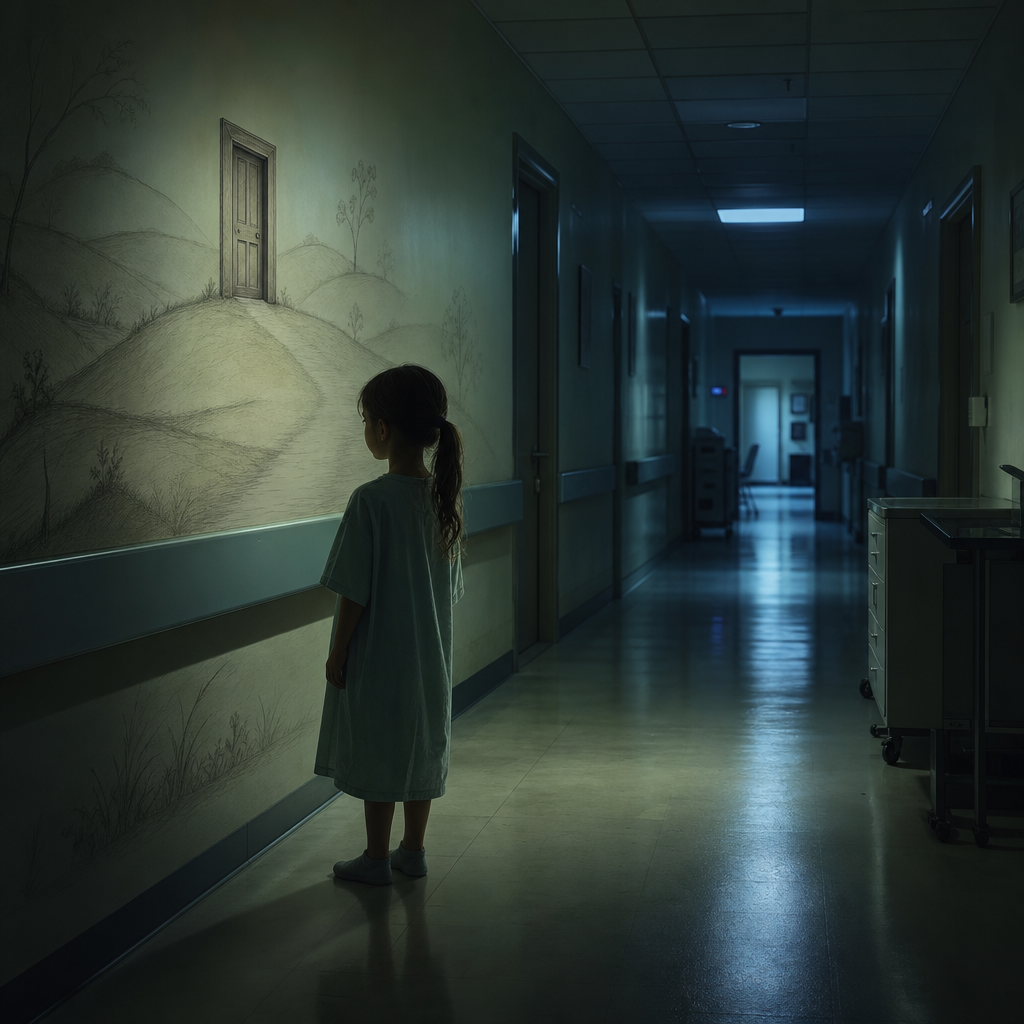
The Sleeping Artists
It's 3 a.m. when you hear the soft scrape of pencil against plaster. You find her in the corridor—eight years old, three weeks comatose, eyes half-open and milky white. Her hand moves in slow, certain arcs across the wall: rolling hills, a crooked tree, a door standing alone with no house around it.
Your breath catches. You've seen this before. Back at the nurses' station, you tear through five recovered patients' discharge folders, and there it is—the same hills, the same crooked tree, the same impossible door. Five patients. Five identical drawings. None of them ever met.
Sometimes the most disturbing thing isn't what patients say — it's what they do while they can't speak.