The Fork in the Dark
The alliance is nothing if not uncomfortable. Mara walks half a step ahead, her lantern casting sharp shadows across her angular face, the map pressed close to her chest like a state secret. You match her knowledge of the tomb's architecture against her partial cartography, and together you navigate three branching corridors, two collapsed antechambers, and a gallery of painted walls depicting the afterlife in breathtaking, unsettling detail. Neither of you speaks more than necessary. But you make progress.
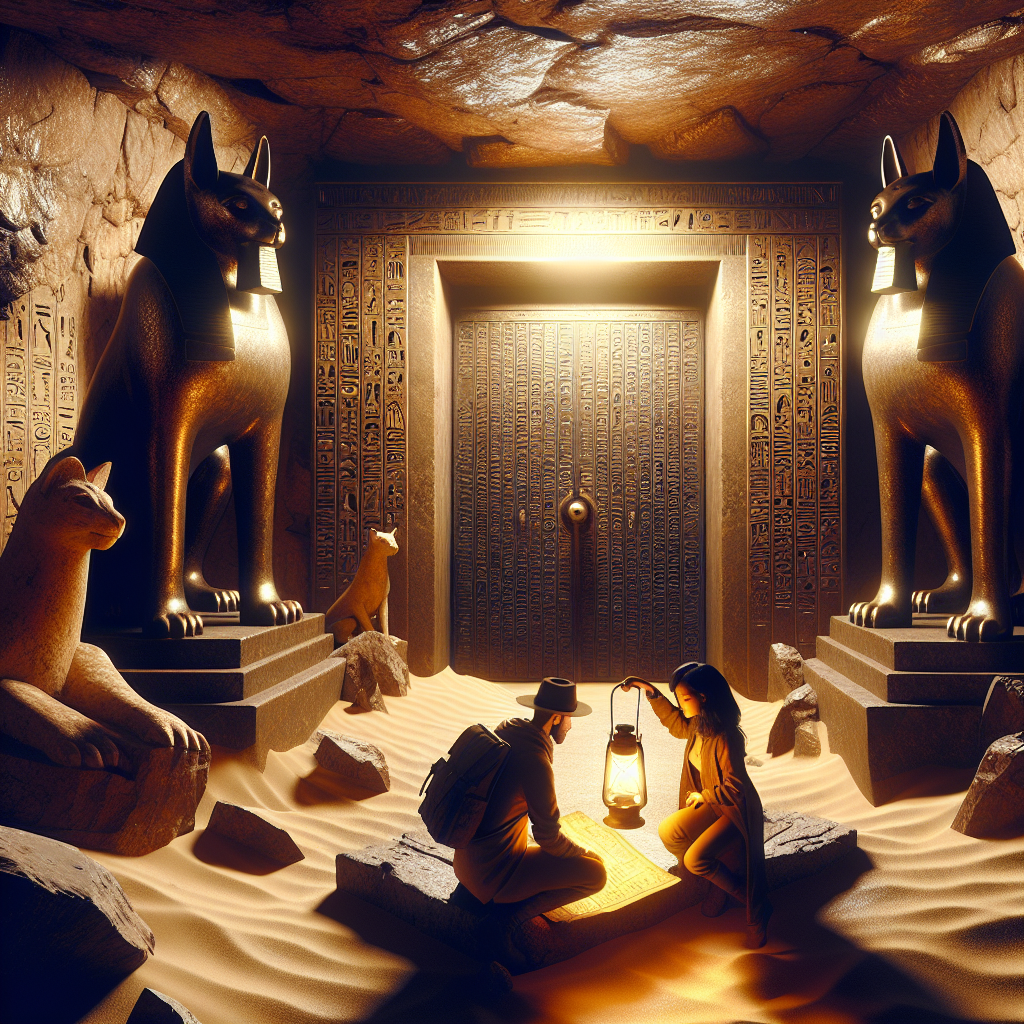
Then you reach the sealed burial chamber, and the silence between you thickens into something heavier. The chamber is a dead end — a massive stone door carved with the cartouche of a forgotten priest-king, flanked by twin obsidian jackals frozen mid-snarl. Mara spreads the map against the cold wall, her finger tracing two diverging lines that branch just beyond the chamber's far side. "Two routes," she says flatly, as if the words taste sour. "The lower crypt, or the Hall of Traps. The map doesn't say which leads to the amulet's sanctum first — only that both eventually do."
You study the faded ink. The lower crypt route descends steeply, and a faint waterline stain on the parchment tells its own story — at some point, that passage flooded. Whether it still holds water is anyone's guess. The Hall of Traps route is marked with tiny symbols you recognize as warnings, the same glyphs Egyptian builders used to discourage grave robbers across three millennia of paranoid craftsmanship. Both paths are dangerous. Both paths lead forward.
Mara rolls the map and fixes you with a measuring look. "Your call," she says, which surprises you more than anything else that's happened underground. The torchlight gutters between you, and somewhere deep below, the tomb breathes.