Bones of the Old Empire
The outpost squats in the snow like a dead animal, half-swallowed by decades of drift. Its steel door bangs against the frame in a wind that smells of iron. You duck inside, headlamp cutting a narrow cone through the dark, and the cold in here is older than the cold outside — settled, patient, undisturbed.
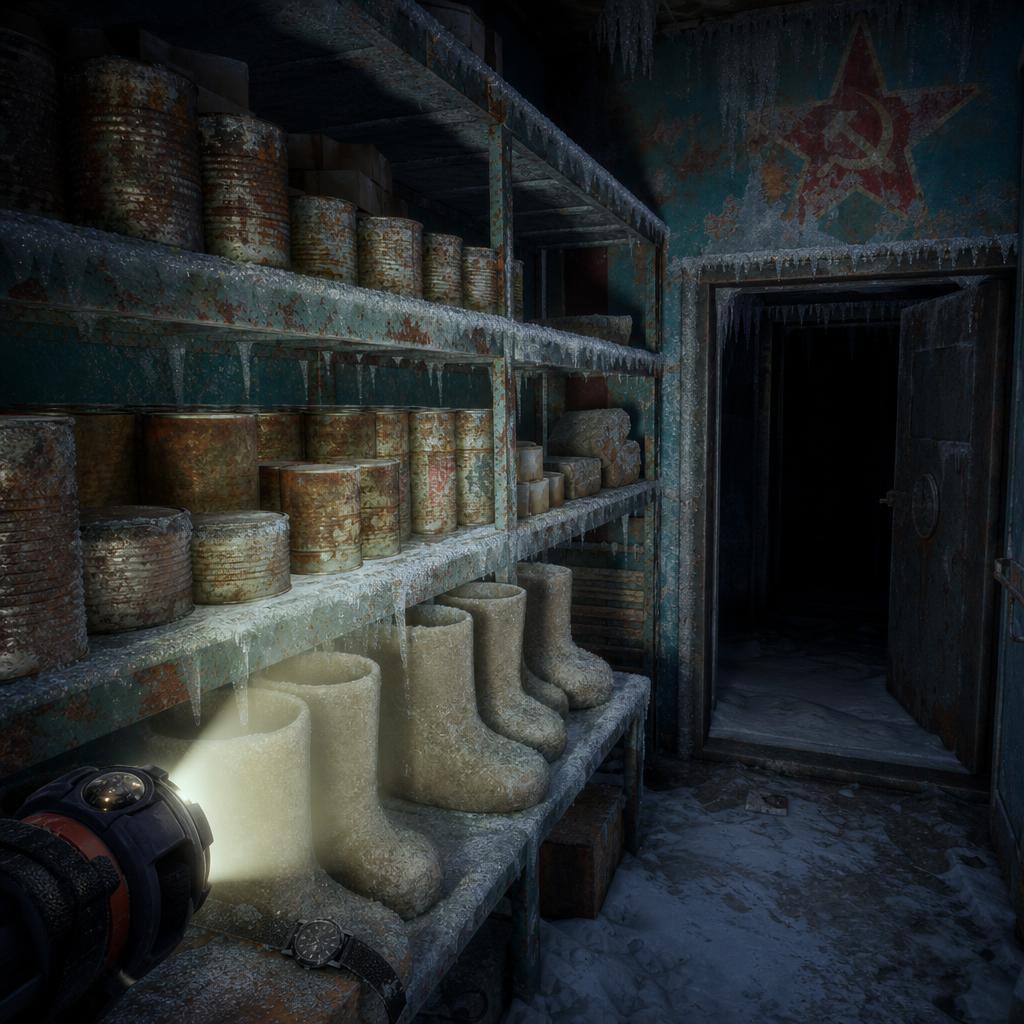
Shelves line the main room: tins stacked in neat Cyrillic rows, labels bleached to ghosts. Tushonka. Sgushchyonka. Forty years of preserved meat and condensed milk, still sealed. Your stomach clenches with something close to gratitude.
Then your light drifts higher, and you see what else the shelves hold. A pair of felt boots, laced. A wool cap. A wristwatch, still wound. Arranged with the same careful spacing as the tins — as though someone had been cataloguing not just food, but the people who once ate it. A doorway at the rear yawns black. You think you hear paper rustling.